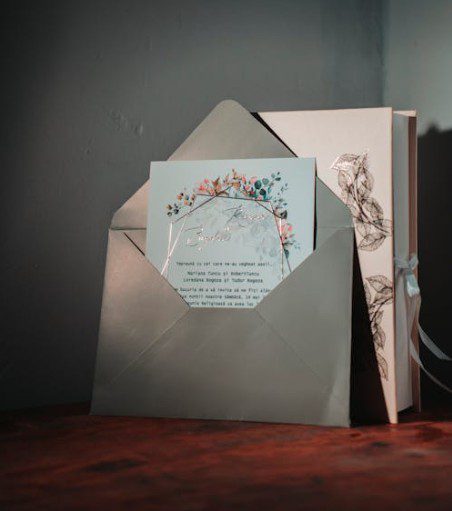
A handwritten wedding card outlasts the flowers, the speeches, and the playlist. Couples tuck them into boxes, pull them out on anniversaries, and quote them to each other years later. That staying power is exactly what makes writing one feel so difficult: you know the words will stick around, and you want them to be worth keeping.
The hesitation is normal. What follows is a practical guide to writing something that actually sounds like you.
Why what you write matters
Text messages and social captions have made handwritten notes rare. That rarity is precisely what gives them weight. When someone takes five minutes to put a thought on paper, the gesture reads as intentional — and the couple notices.
The cards that get saved share a few things in common: they name the couple specifically rather than addressing a generic “you two,” they express genuine emotion rather than performing it, and they say one thing well instead of several things adequately. Length has nothing to do with it.
A structure that works for almost every card
If you are unsure where to begin, three moves cover most situations: congratulate the couple, say something personal, wish them something specific for the future.
That might look like: “Congratulations on today. Watching you two together this past year has made the whole thing feel inevitable. Wishing you a life that keeps surprising you.”
Short, direct, and genuinely felt. That is the target.
Classic and romantic wishes
These work for any couple, any venue, any relationship where you do not have a specific memory or story to lean on.
- Wishing you both a lifetime of love and happiness.
- May your marriage be filled with joy and lasting devotion.
- Cheers to love, laughter, and a life built together.
- May today be the beginning of something extraordinary.
- Watching the two of you together is a reminder that it is all real.
The last one earns its place because it says something concrete: the writer is a witness, not just a well-wisher.
Writing to a close friend
This is where the generic falls flat. A close friend will notice if your card could have been written by anyone. Use what you actually know: a specific memory, a quality you genuinely admire, the moment you knew this person had found the right one.
A few starting points:
- “I’ve been waiting to write this card since [specific moment]. You deserve every bit of this.”
- “Thank you for letting me be here. Wishing you both a life as good as the last few years have already been.”
- “From [shared memory] to today — it has been such a privilege to watch your story unfold.”
Adding one real detail makes the rest of the card land differently.
Formal messages
For traditional weddings, professional relationships, or couples you do not know as well:
- Congratulations on your marriage and best wishes for a life full of happiness.
- May your union be filled with love, harmony, and enduring joy.
- Warmest congratulations on this very special occasion.
- Wishing you both a future filled with good memories and shared adventures.
These are appropriate precisely because they do not overstep. Warmth without presumed intimacy.
Humour, when it fits
A funny wedding card works when the joke is affectionate, when you know the couple well enough to get the tone right, and when the rest of the card still says something sincere. A card that is only a joke tends to read as deflection.
A few that stay on the right side of the line:
- Marriage is mostly finding someone to share dessert with for the rest of your life.
- Congratulations on becoming each other’s permanent plus-one.
- Here’s to love, patience, and finally agreeing on what to watch.
Pair one of these with a genuine line and the card will feel warm rather than avoidant.
Messages by relationship
Family: Emotion is expected here. “Seeing you so happy fills our hearts with joy. Wishing you both a lifetime of love and laughter.” — simple and direct.
Colleagues: Keep it warm but measured. “Congratulations on your wedding. Wishing you both every happiness in this new chapter together.” — polished, appropriate, nothing to regret.
Close friends: This is where you should take the longest. Mention something specific. The card will be reread.
Short messages that hold up
Not every card has space for a paragraph. These work well on their own or alongside a gift:
- Wishing you endless love and happiness.
- Congratulations on your wedding.
- Cheers to forever.
- So happy for you both.
- Here’s to your next chapter.
Short and considered beats long and padded.
Quotes worth including
A quote paired with a personal line creates something layered. A quote alone can read as avoidance. Use them to open or close a message, not as the message itself.
- “Where there is love there is life.” — Gandhi
- “Love recognizes no barriers.” — Maya Angelou
- “Whatever our souls are made of, his and mine are the same.” — Emily Brontë
- “Grow old along with me. The best is yet to be.” — Robert Browning
What to avoid
Mentioning ex-partners, offering unsolicited marriage advice, writing something longer than the space allows, or copying a message you found online and leaving it unchanged. The couple will have read the same lists you have. What they will not have read is something only you could have written.
Common questions
How long should the message be? Two to six sentences covers most situations. A well-chosen sentence outperforms a well-intentioned paragraph.
Formal or casual? Match the wedding. A black-tie ceremony calls for different wording than a backyard gathering. Match the couple when you know them well enough to.
What if I barely know them? Keep it warm and universal: congratulations, a genuine wish for their future, nothing that requires context you do not have.
Can I use a quote? Yes, but add a line of your own. Otherwise the quote does the work and you do not show up.
The best wedding cards do one thing: they make the couple feel seen. That does not require perfect prose. It requires paying attention to who they actually are and writing something that only you, in this moment, could have written.